

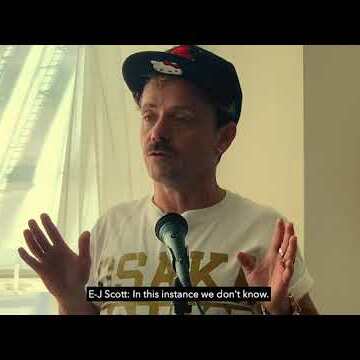
Le Gateau Chocolat shares the inredible stories behind his three submissions to the imaginary queer museum.
Bewitching baritone Le Gateau Chocolat is a one-man, larger-than-life musical phenomenon. The six-and-half foot tall, six-inch heeled, wig-clad wonder swings wildly from one end of the musical spectrum to another, from disco, opera, musicals and pop.
In this interview Le Gateau talks about his first time on stage, his operaTIC foremothers, and about his extravagant collection of plants...
Recorded remotely on May 10, 2021
Interview by: Roni Guetta and David Sheppeard
Editing and original music by Olive Mondegreen
Brighton Lesbian and Gay Pride, 15-25 May 1992, was organised by a small group of people under the name of Pink Parasol. In the run up to the event they produced a leaflet about their plans for Pride, which included the unveiling of a Lesbian & Gay Pride Memorial in the Old Steine. The leaflet announced the unveiling on Sunday 17 May 1992, and made it sound very much like it was a done deal with the council.
"Brighton Council has pledged a central site on the Old Steine and has agreed to install and maintain the memorial. The granite slabs from which it is to be made are ready for work to begin. The design and wording has been consulted on and approved.
"The memorial is a celebration of our Pride over the last quarter of a century. It is dedicated to the lives of ordinary lesbians and gay men who preceded us, to ourselves, and to the future equality of those who will follow us in this life".
When a group of us gathered to attend the unveiling, we were surprised so see there was only a chalk outline of the memorial drawn on the ground, with the design beautifully brought to life with flowers.
According to a news report in Capital Gay by Richard Smith, the council rejected the proposal very late in the day. One of the objections raised was that the Pride memorial was too close to the existing war memorial. Sadly the Pride Memorial was never realised in anything more than flowers.
A small feature piece 'Transexual movie' advertising a screening of the film 'Let Me Die A Woman' at Brighton's Continentale Cinema, Sudeley Place, 9 December 1982. This and the accompanying listing come from Issue 2 of The Lavender Letter - courtesy of the Bishopsgate Institute.
A review of the film 'Let Me Die A Woman' screened at Brighton's Continentale Cinema, Sudeley Place, 9 December 1982. This comes from Issue 3 of The Lavender Letter - courtesy of the Bishopsgate Institute.
This is the concluding paragraph of the review: "The transsexual is far more the sexual outlaw (to borrow John Rechy's expression) than the gay man or woman and a movie like 'Let Me Die A Woman' can serve no purpose other than to titillate those who find humour or entertainment in the anguish of others." The advert for the film comes with the copy: Born a man... Let Me Die A Woman. All true! All real! See a man become a woman before your eyes!
Abigail Dombey in conversation with Kate Wildblood, reflecting on queer life on Brighton during 1989-1992 and the community created through protest and Pride courtesy of the discovery of Abigail’s long lost slide film collection.
From her job in the local camera shop to the streets of Brighton, Abigail Dombey, a budding 18-year-old queer reportage photographer, was capturing the passion and the prejudice of early 1990s Brighton, one 35mm slide film at a time.
A time where bigotry and fear stalked the LGBTQ+ community as they fought against the Tories’ hateful Section 28 legislation, the media’s toxic narrative and society’s demonisation of queer lives at a time of the HIV and AIDS pandemic. A time of Doc Marten’s pounding the streets in protest, placards held high, hearts full of the desire for action (and occasionally each other). A time of grassroots activism as the shame fuelled by Section 28 loomed large over our lives, homophobic violence a daily reality, challenging our sense of LGBTQ+ community as we fought to create our modern day Pride movement.
It was our time, of baby dykes and glorious queers, of prejudice, protests and those all-important picnics. A time that saw us determined to challenge the unremitting homophobia that filled our lives and change the world together. One protest t-shirt at a time.
History isn't just in the past; it's in the present. All the steps and moments we take as a community lead to radical changes. We invite you to bring photos or look through your memories of what's in Brighton and is making history. We will have a map of Brighton to gather around and discuss what makes Brighton the place for you.
Queer Heritage South; powered by Marlborough Productions. Made possible thanks to The National Lottery Heritage Fund.
Filmed by Lucy Lebrocq
Saturday 21st June - Brighton dykes congregate in joy and power post-march in the sun. A selection of hand made protest signs are held in pride and solidarity with trans friends and Palestine.
Flyer containing information about London Gay Pride events in July 1996.
Events include LGBT Pride march at Hyde Park and Pride Festival held at Clapham Common for the first time.
Schedule of the Cabaret tent and Bisexual tent at Pride Festival are detailed.
LOVEBOOTH NEW YEAR'S EVE, 31 December 2013 - 1 January 2014
Video shot and edited by Sharon Kilgannon at Alonglines Photography. The video documents the NYE event which took place at Phoenix Art Gallery.
Flyer advertising Lunch Positive, a weekly social group for people living with HIV in Brighton. Meetings were held every Friday in Dorset Gardens Methodist Church and involved sharing lunch and meeting and supporting other people with HIV.
Lunch Positive was established in 2009 as a weekly lunch club for people living with HIV and their carers. It provides a welcoming space where good food, meeting people and the chance to find out more about healthy eating are positive steps towards improved well-being.
The club meets every Friday from 12 noon to 2.30 pm, with lunch served from 1 pm at the Community Hall, Dorset Gardens Methodist Church.
Get it sorted at Terrence Higgins Trust and Lunch Positive's new drop-in advice service for all people living with and affected by HIV, and enjoy a healthy and nutritious lunch at the same time.
Free advice and information about issues affecting daily life, including benefit issues, housing, disclosure, food poverty, money troubles, isolation & loneliness, returning to work, lifestyle changes.
Lunch Positive HIV Lunch Club runs every Friday from 12–3 pm. The advice drop-in service is on the first Friday of every month between 12–2 pm.
Weekly HIV community lunch club opens on Fridays from 12 midday until 3 pm. Lunch is from 1 pm and costs £1.50, or is free if needed. Come along at any time that suits you.